The couple's mental load: the checklist to make it visible (and share it)
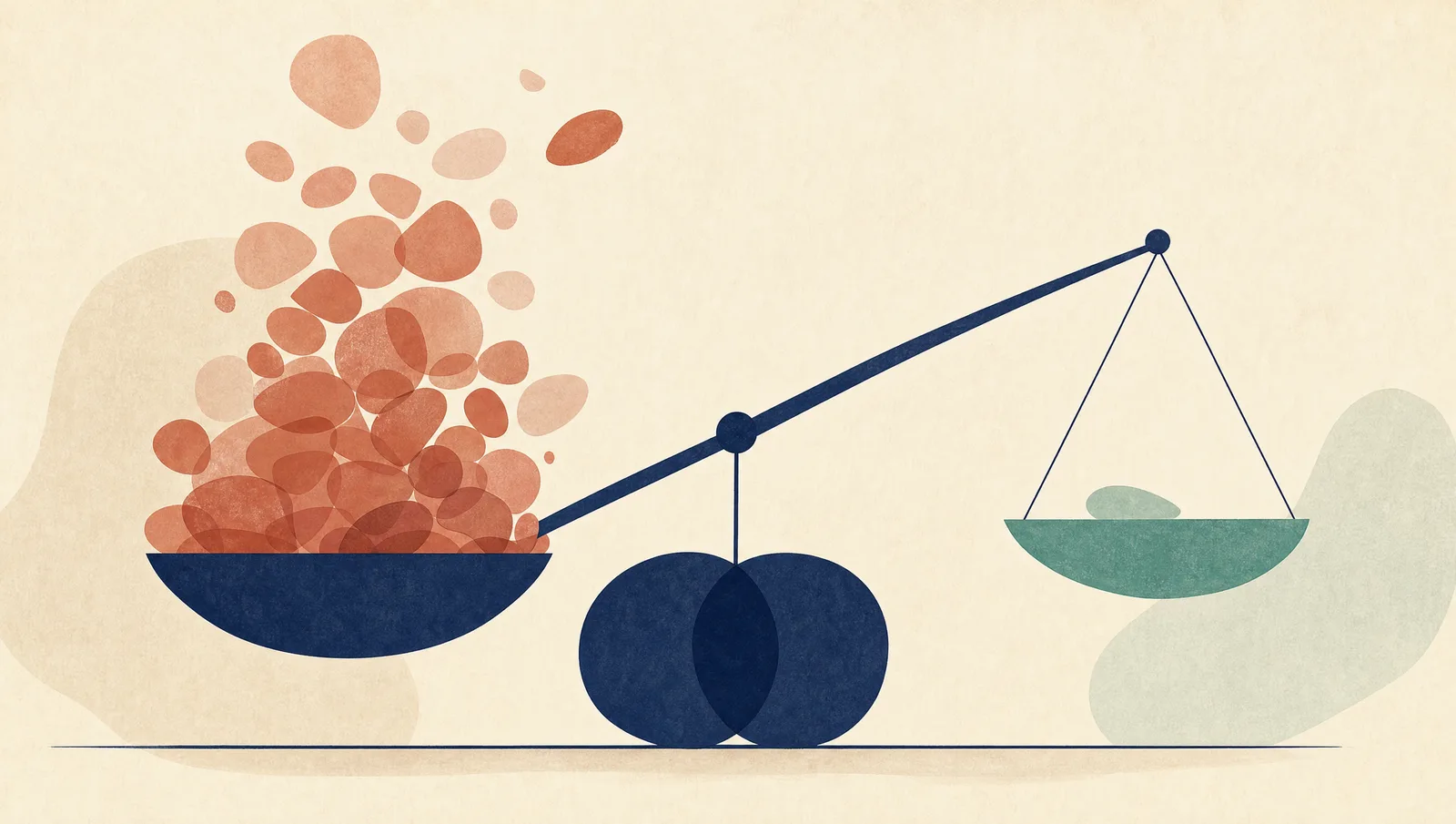
It’s not so much doing the grocery shopping that drains you — it’s thinking about it: remembering you’re out of milk, planning ahead for a birthday gift, knowing when to book the dentist. That invisible work of constant management is the mental load. And as long as it stays invisible, it almost always falls on the same person.
Making it visible is the first step toward sharing it. Here’s how, with a checklist.
What exactly is mental load?
It’s not the list of household chores. It’s the layer above: thinking about everything, planning, anticipating, remembering, delegating. It’s taking on the role of the household’s “project manager” — the one who carries the complete to-do list in their head, at all times, even when the other person “helps.”
The difference is crucial: doing the dishes when asked is executing. Knowing they need to be done, organising it, remembering to ask — that’s carrying the load.
Why it creates tension
- It’s invisible, so it’s rarely acknowledged. “But I do so many things!” — yes, but who thinks about them?
- The classic “you just have to ask” shifts the load back onto the person already carrying it: asking is still managing.
- The imbalance, left unspoken, slowly turns into resentment.
Making it visible: the checklist
The most powerful approach is also the simplest: write down all the invisible work, together, so you can both see it. Go through each domain and note who thinks about what (not just who does it):
- Home: groceries, supplies, cleaning, laundry, repairs — who notices when something’s missing?
- Admin: bills, paperwork, appointments, insurance, taxes.
- Health: medical appointments, prescriptions, follow-ups.
- Social & family: birthdays, gifts, invitations, keeping up with loved ones.
- Daily logistics: shared calendar, who does what when, unexpected events.
- (If you have children): school, activities, belongings, appointments.
For each item, note who thinks about it today. The imbalance becomes immediately obvious — and that’s exactly the point: you can’t share what you can’t see.
How to share it (for real)
Sharing mental load isn’t about “helping more.” It’s about taking full ownership of entire domains — the thinking and the doing. “From now on, health is your responsibility” is worth a thousand “just tell me what I can do.”
Review the list regularly, for instance during your weekly check-in, and readjust as needed.
Talking about it without it turning into a trial
This is a sensitive topic: it’s easy to slide into accusations. Stay focused on feelings and needs rather than blame — speak in “I” statements. The goal isn’t to find a guilty party, but to rebalance a load that nobody consciously decided to distribute this way.
Mental load doesn’t get fixed by doing “more” — it gets fixed by seeing it, then redistributing the thinking, not just the tasks. The checklist is the starting point.
In CoupleUp, the shared tracker and the weekly check-in help keep that balance in view, week after week. The app doesn’t judge the distribution: it makes it visible, so you can decide together.
Want to try it together?
CoupleUp is free, hosted in Europe, ad-free.
Read next
- Mental load in a childfree couple: why it exists too"Mental load is a parents' thing." Wrong. Even without kids, someone is always thinking of everything: home, admin, social life, holidays. Why it stays invisible, and how to rebalance it.
- After an argument, who should make the first move?After a fight, each partner waits for the other to reach out. Making the first move isn't admitting you're wrong — it's choosing your relationship over being right.
- Long distance: do you really need to talk every day?"Real couples talk every day" — really? In long distance, the quality of your exchanges matters more than how often you have them. Find YOUR rhythm without the guilt.